

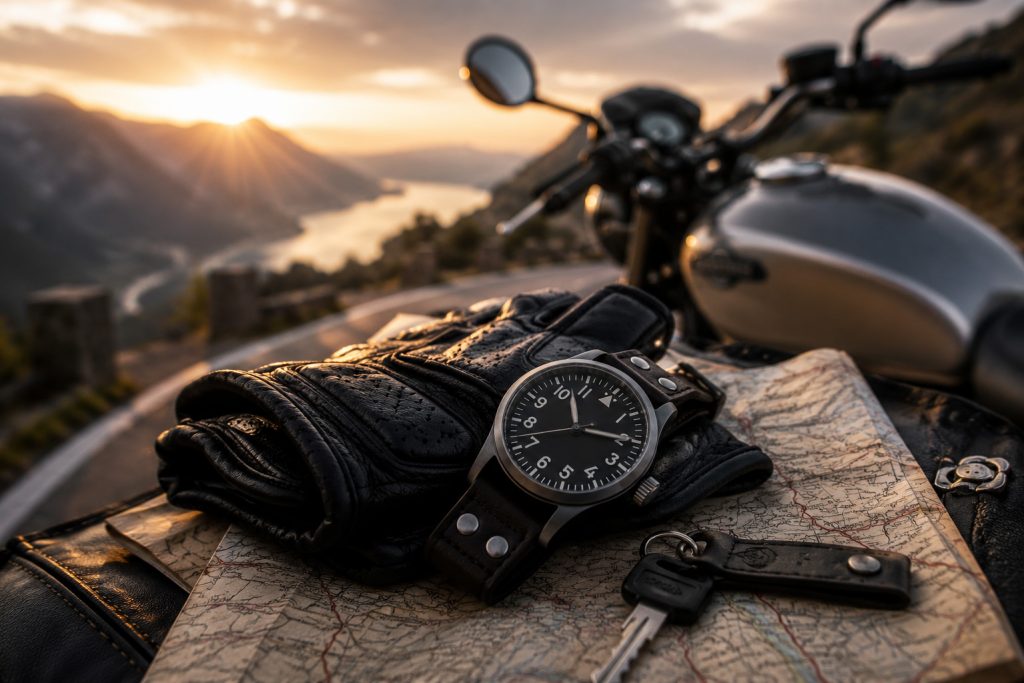
Motorcyclists and watch enthusiasts actually have a surprising amount in common. Both are emotional, mechanical and often anything but rational. Nobody truly needs a motorcycle full of character or a high-quality mechanical watch — but that is often exactly the point.
For many riders, a watch is far more than just a tool for telling time. It becomes part of the style, the fascination with engineering and often part of the entire feeling of a journey. Just like motorcycles, watches tell stories.
Anyone who has ever ridden a Harley-Davidson, a Moto Guzzi or a big twin-cylinder motorcycle knows the feeling: You feel the engine. You feel the vibrations. That is exactly what makes them so appealing. That is exactly what many riders love about them.
But what does that actually mean for a wristwatch?
Many motorcyclists are naturally fascinated by technology, mechanics and precision. Add to that a passion for great design, real character, authentic tradition and high-quality craftsmanship.
That is why you so often see riders wearing pilot watches, dive watches, military-style tool watches, classic vintage watches, rugged automatic watches or bold chronographs.
Much like in the world of aviation or ships, watches simply feel like they belong. They represent adventure, a fascination with engineering and a sense of personality — and many riders wear them for years throughout countless journeys and tours.
The Big Issue: Vibrations
This is where things start getting technically interesting.
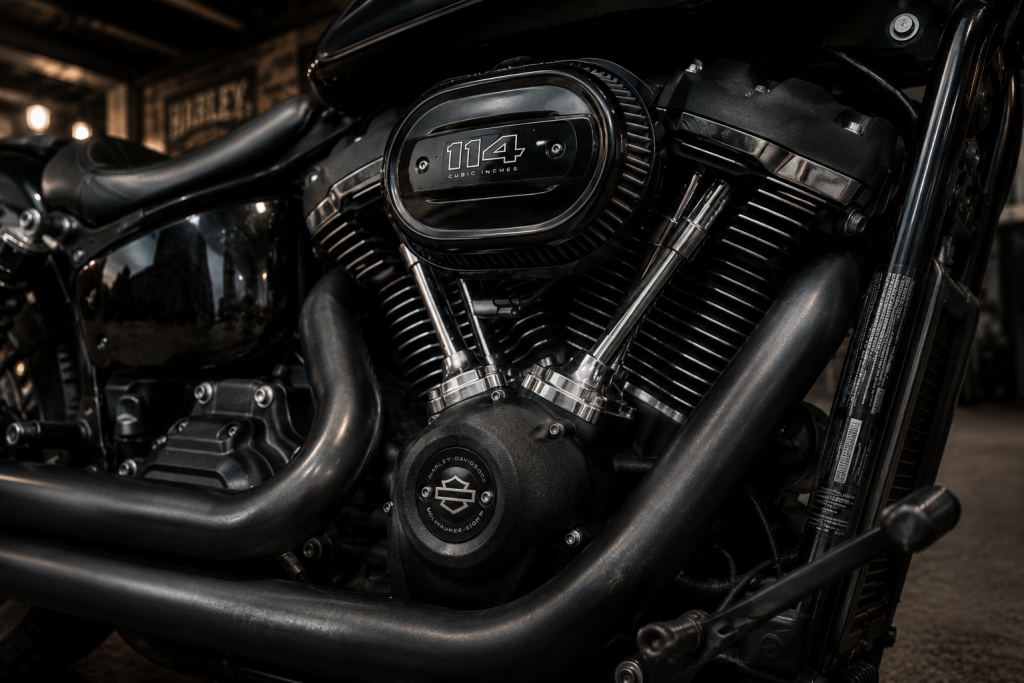
Depending on their design, motorcycles can produce very different kinds of vibrations. Particularly demanding are large single-cylinder engines, classic Harley-Davidson V-twins, Moto Guzzi V2 engines, older twin-cylinder motorcycles, rigid engine mounts or engines built around massive torque and character.
These motorcycles often create strong, low-frequency vibrations. And it is exactly these constant vibrations that can potentially have long-term effects on mechanical watches.
What Can Happen to an Automatic Watch?
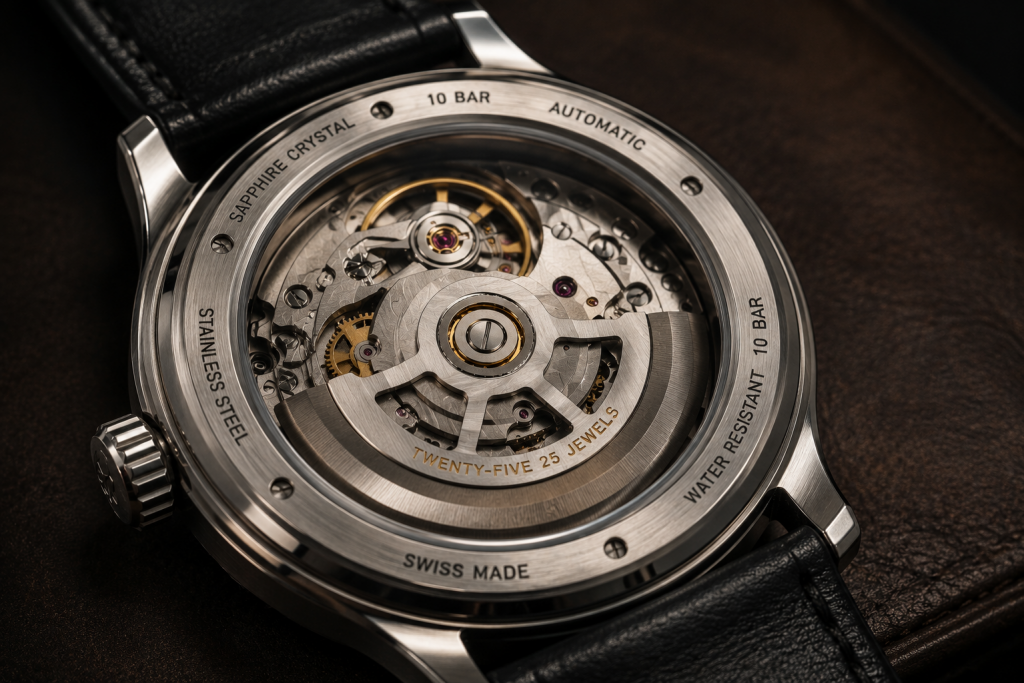
A mechanical automatic watch is a small piece of precision engineering. Inside, finely tuned components work together — including tiny gears, jewel bearings, the delicate balance spring, the escapement, the moving rotor and the entire winding mechanism.
All of these parts operate with extremely small tolerances and are often more sensitive to constant stress than many people realize.
Strong and continuous vibrations can eventually lead to increased wear, reduced accuracy or small mechanical loosenings over time. Components that may be particularly affected include the rotor bearing, the automatic winding mechanism and the so-called slipping clutch inside an automatic watch.
Especially during long-distance tours on heavily vibrating motorcycles, this can absolutely become a factor.
The Slipping Clutch – Why It Matters
Automatic watches usually feature a so-called slipping clutch. Its purpose is to prevent the mainspring from being overwound and to protect the movement from excessive tension.
In practice, this means that once the spring is fully wound, it begins to slip in a controlled way inside the barrel. And it is exactly at this point where constant vibrations can create additional mechanical stress over time.
Possible consequences include increased wear, inconsistent winding, fluctuating timekeeping accuracy, subtle mechanical noises or long-term wear of individual components.
That does not automatically mean that an automatic watch will immediately become damaged. Many motorcyclists have been wearing mechanical watches on their tours for years without experiencing any problems.
However, strong and constant vibrations are definitely not ideal for sensitive mechanical systems.
Hand-Wound Watches – The Better Solution?
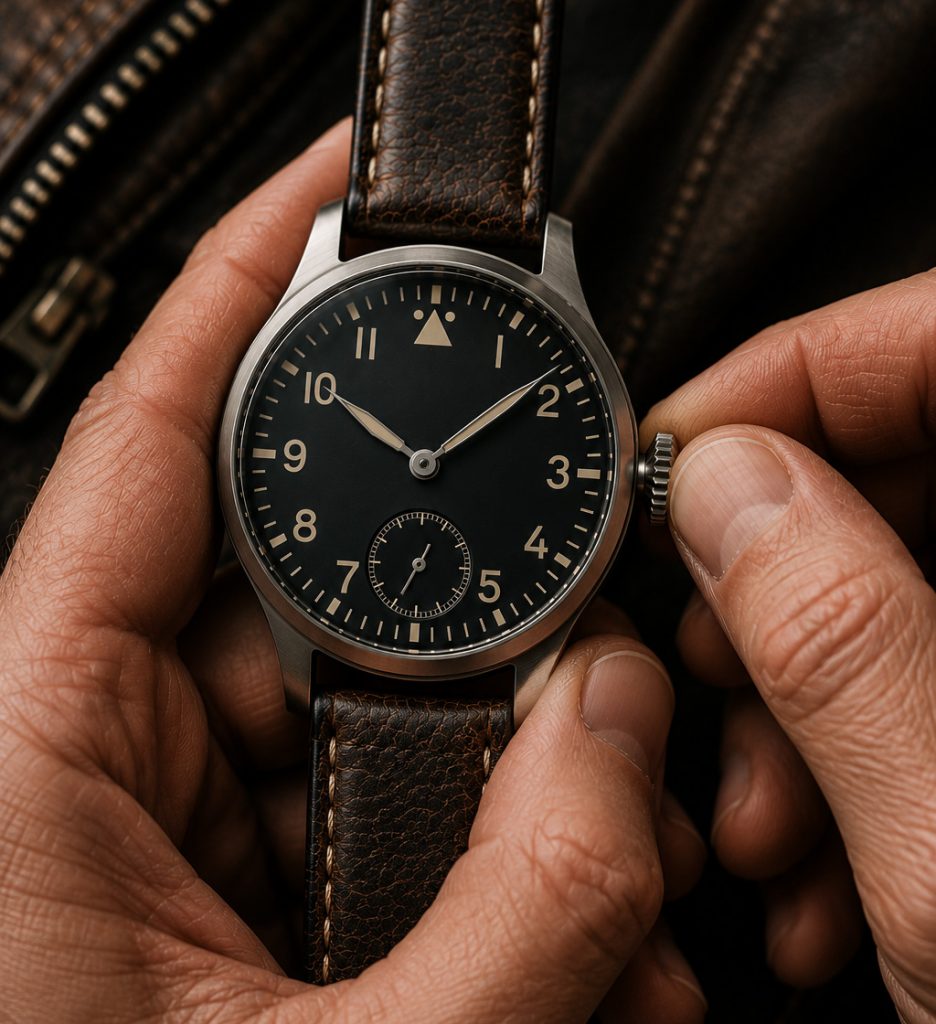
A hand-wound watch has one important advantage: it does not use a rotor. This eliminates several sensitive components such as the rotor bearing, the rotor axle and the entire automatic winding mechanism.
As a result, a hand-wound watch can be mechanically a bit more resistant to constant vibrations and long-term shocks.
That said, it still remains a purely mechanical watch. Long-term stress can still affect its accuracy, delicate bearings, the escapement or overall wear over time.
Even so, some motorcyclists deliberately prefer classic hand-wound watches — especially on characterful motorcycles with strong and constant vibrations.
Quartz Watches – Technically the Ideal Solution
Now comes the part many watch enthusiasts probably do not like to hear: when it comes to motorcycling — especially on heavily vibrating motorcycles — quartz watches are often the most sensible technical solution.
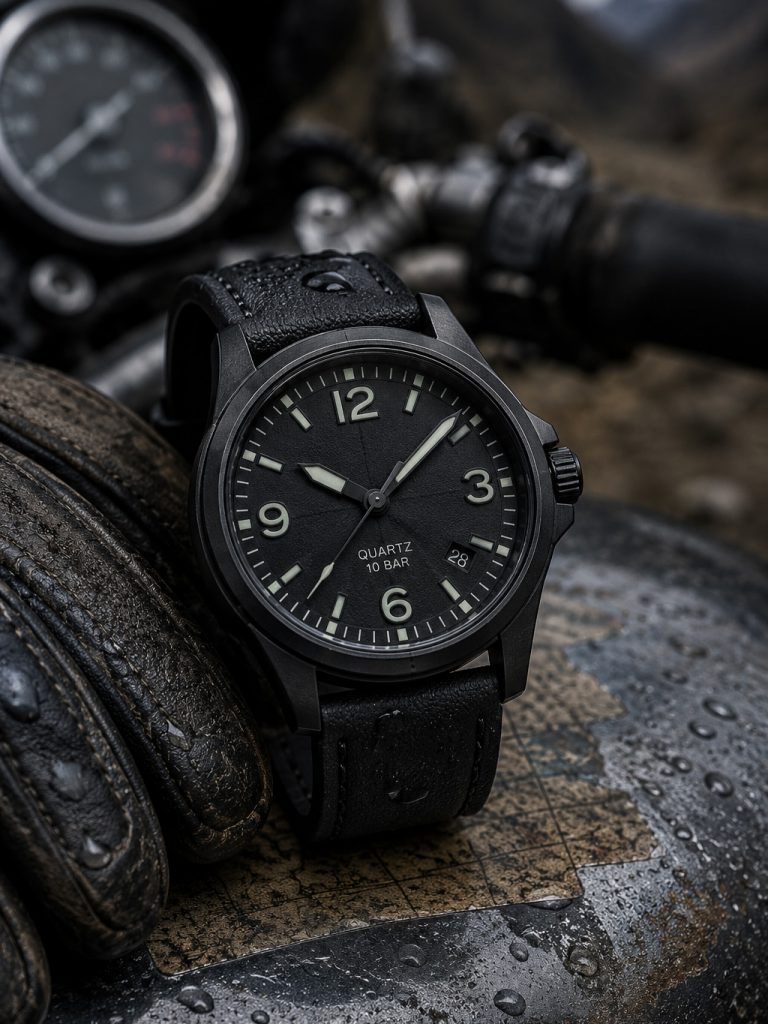
The reason for this is relatively simple. Quartz watches contain far fewer moving parts, no rotor and overall significantly fewer delicate mechanical components. As a result, they are exposed to much less stress from constant vibrations or hard impacts.
They also offer excellent shock resistance, very accurate timekeeping and often impressive everyday reliability under demanding conditions.
Especially during long adventure tours, demanding off-road riding, days of heavy rain, rough gravel roads or generally on journeys with strong vibrations, modern quartz watches have clear advantages.
The small problem: many watch enthusiasts love exactly what quartz watches lack — the mechanics, the movement itself and the emotional character of a classic mechanical watch.
And that is precisely why many motorcyclists still prefer an automatic watch despite all the technical disadvantages.
Digital Watches – Probably the Most Practical Solution
From a purely technical perspective, digital watches are often the most robust and worry-free option for motorcycling.
The reason is quite obvious: digital watches contain very few moving parts and completely avoid delicate mechanical components. There is no rotor, no mainspring, no escapement and no mechanical bearings that could suffer from constant vibrations over time.
As a result, digital models are far less sensitive to hard impacts, strong shocks, long off-road rides, rain or motorcycles with constant heavy vibrations.
Especially on motorcycles full of character and powerful engine vibrations, digital watches may actually become the most durable long-term solution.
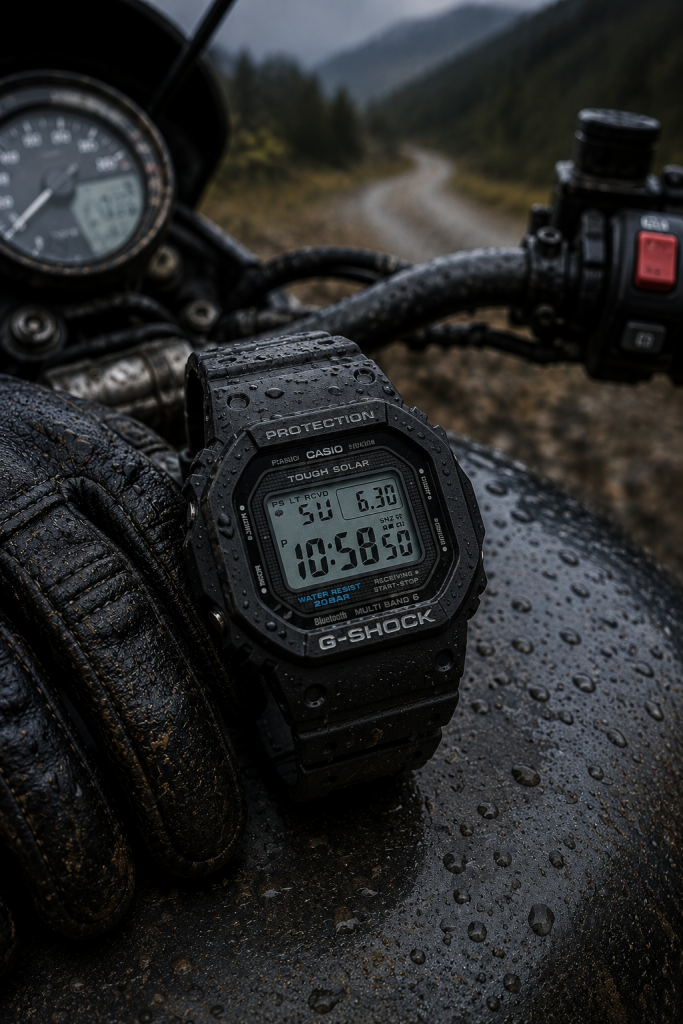
Many modern models also offer highly practical features such as solar charging, radio-controlled timekeeping, extreme shock resistance, excellent water resistance, timers, world time, illumination and exceptionally long battery life.
Particularly rugged outdoor watches or classic G-Shock models are considered almost indestructible by many motorcycle travelers.
The downside from the perspective of many watch enthusiasts is that digital watches often lack exactly what makes mechanical watches emotionally appealing — visible mechanics, the movement of the watch movement, genuine tradition, technical character and the feeling of fine mechanical engineering.
That is why, in the end, the decision often becomes a balance between logic and emotion.
How Problematic Are Motorcycle Vibrations Really?
The honest answer is: it depends heavily on the motorcycle, the riding style and, of course, the specific watch itself.
A modern, high-quality automatic watch can often handle an impressive amount of stress. More problematic are usually extreme long-term exposure to strong vibrations, extended journeys or particularly characterful engines.
This especially includes hard-running single-cylinder engines, older or character-rich twin-cylinder motorcycles, large V-twin engines such as classic Harley-Davidson or Moto Guzzi setups, intensive off-road riding and continuously high RPMs.
Many motorcyclists have been wearing mechanical watches on their tours for decades without ever experiencing problems.

Others, however, report issues such as loose rotors, reduced accuracy, damaged bearings or additional service requirements after long journeys with heavy and constant vibrations.
That is why there is no absolute answer. Some watches handle these kinds of stresses surprisingly well — while others react far more sensitively to continuous vibrations and long-term mechanical strain.
Which Watch Works Best for Motorcycling?
A good motorcycle watch should above all be robust, easy to read and practical for everyday use. Important factors include sufficient water resistance, a comfortable case height and a strap that remains comfortable even during long rides.
When riding a motorcycle, a watch is often exposed to much harsher conditions than in everyday life. Rain, moisture, major temperature changes, gloves and constant vibrations are simply part of the experience. That is why watches with less than 10 ATM water resistance are generally considered borderline for serious riding. For travel and bad weather, 20 ATM or classic dive watches are often the better choice.
Case thickness is also frequently underestimated. Very thick watches or large chronographs can quickly become uncomfortable under tight motorcycle jackets, long gloves or in a more aggressive riding position. Slimmer and more compact watches usually feel much more comfortable during long tours.
The choice of strap also depends heavily on the intended use. Leather straps look fantastic on classic motorcycles or cafe racers, but they are more sensitive to rain and moisture. Metal bracelets are tougher and easier to maintain, while high-quality rubber or nylon straps are often the most practical solution for traveling.
Among motorcyclists, particularly popular choices include rugged dive watches, highly legible pilot watches, functional field watches and extremely durable G-Shock models. In the end, however, the right watch depends less on pure technical specifications and more on personal taste.
Because just like with motorcycles themselves, the decision is often driven not only by logic — but also by emotion.
Some watches simply tell the time.
Others collect memories.