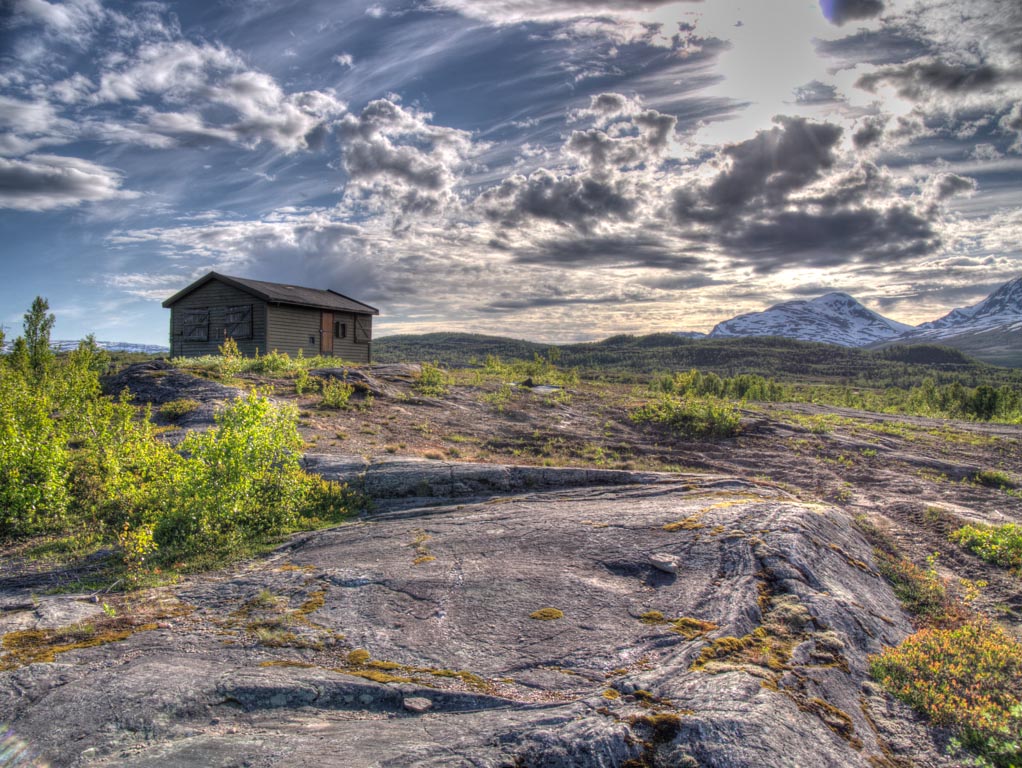

On our final day, we had another 426 kilometers ahead of us, almost entirely on the motorway. With beautiful weather, it turned into an easy and relaxing ride. Sure, we ran into a few traffic jams along the way, but nothing serious, and by early afternoon we were back home.
Looking back, we were incredibly lucky with the weather. During our time in Norway, rain was forecast almost every single day. In reality, we had less than two full days of rain over the entire trip. We really couldn’t have asked for more.
Southern Sweden surprised us in a positive way. The roads were twisty, enjoyable, and technically demanding. However, the farther north we traveled, the straighter the roads became. At some point, even the hundredth lake starts to lose its wow factor.
One small detail caught our attention: in Sweden, about 99% of the parking areas have no benches. In Norway, it’s almost the opposite. Nearly every rest area invites you to stop, sit down, and enjoy the scenery.
Finding a cabin was also much easier in Norway than in Sweden, simply because there are far more accommodation options available.
Another thing we noticed in Sweden was the incredible number of horses. It seemed as if almost every property had a few. And no matter where we rode, it was nearly impossible to go half an hour without seeing a sign pointing to a golf course. Is golf Sweden’s national sport, or is it simply a paradise for wealthy retirees? We still don’t know.
On many of the twistier roads, the asphalt was surprisingly rough—more reminiscent of some roads in Hungary than what we had expected from Sweden.
Shortly after crossing into Norway, we both agreed on one thing: Sweden probably won’t be one of our future motorcycle destinations.
For us, Norway remains the number one country for motorcycle touring.
The scenery changes almost immediately after crossing the border. Add to that the hospitality you can feel at almost every parking area, the abundance of cabins, and roads that seem as though they were designed specifically for motorcyclists.
We’ll be back.
No later than 2028.
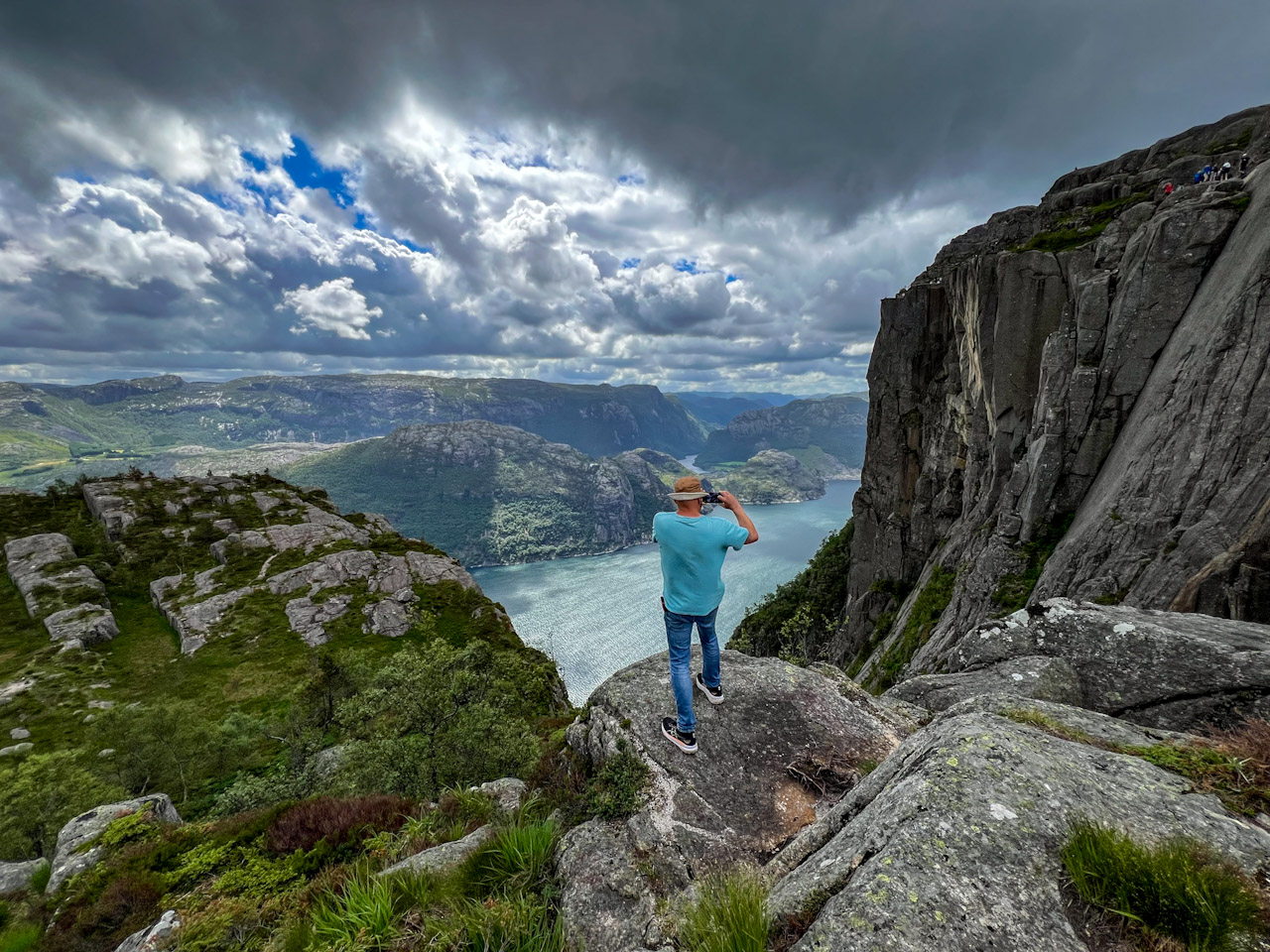
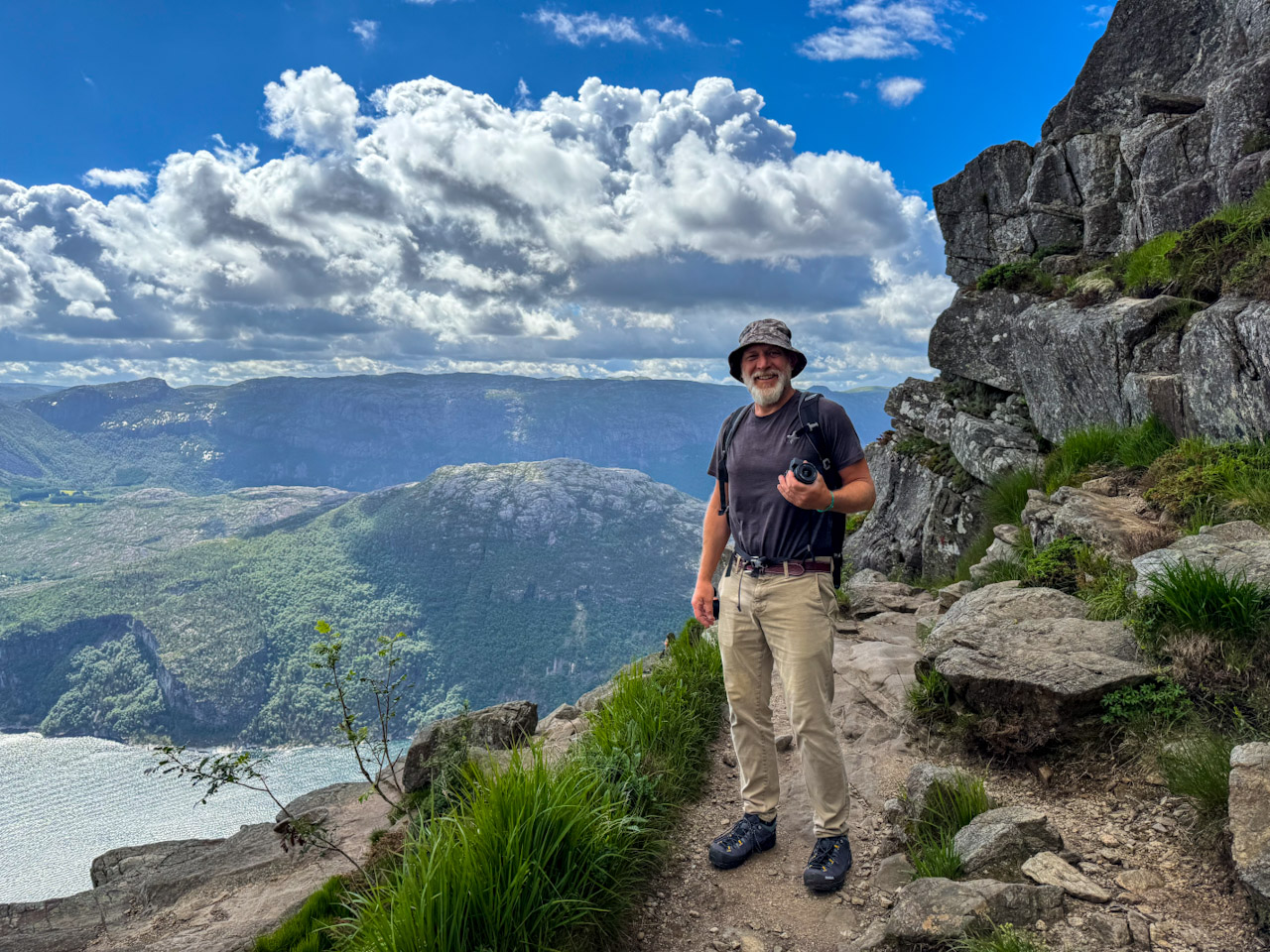
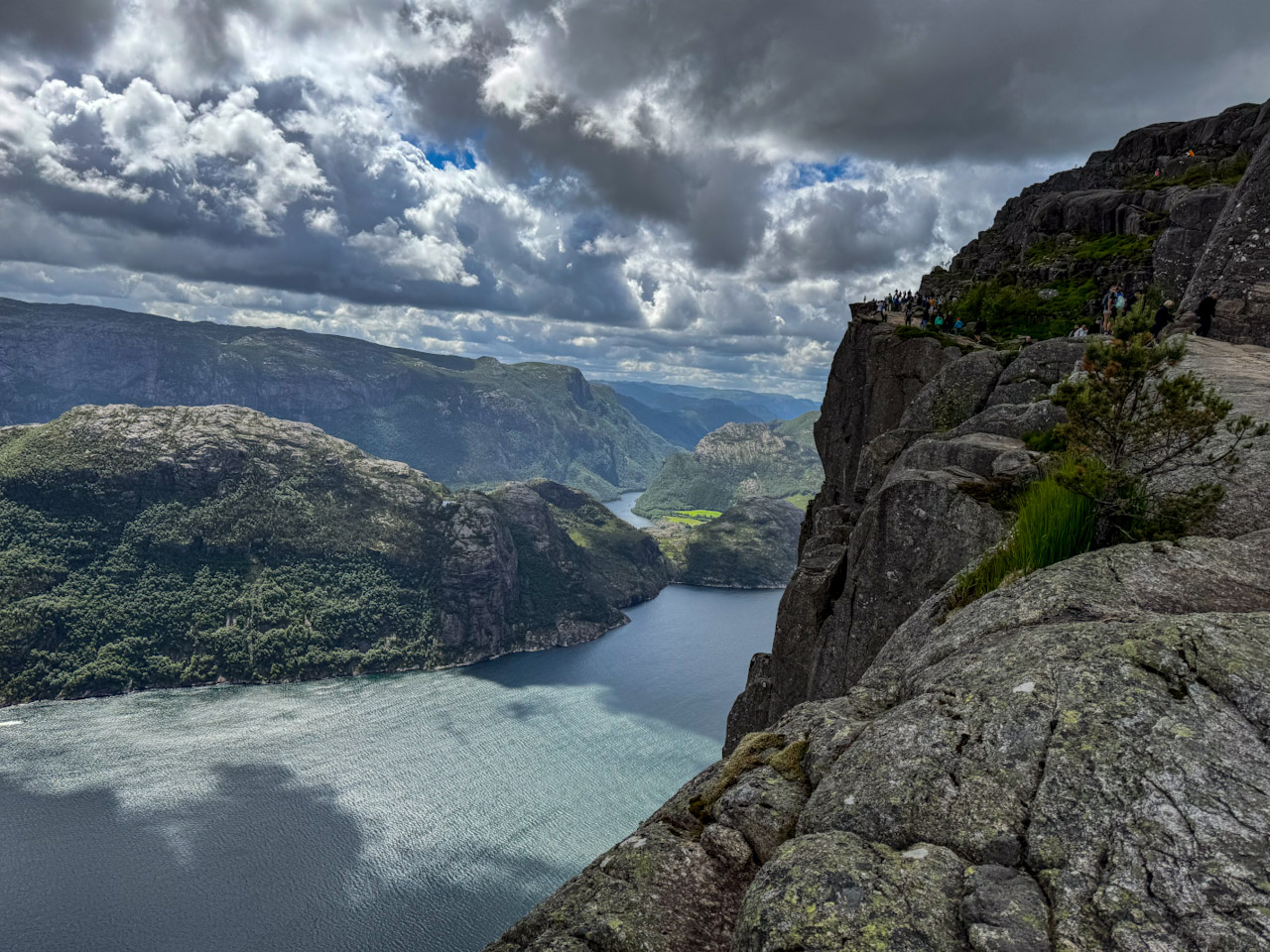
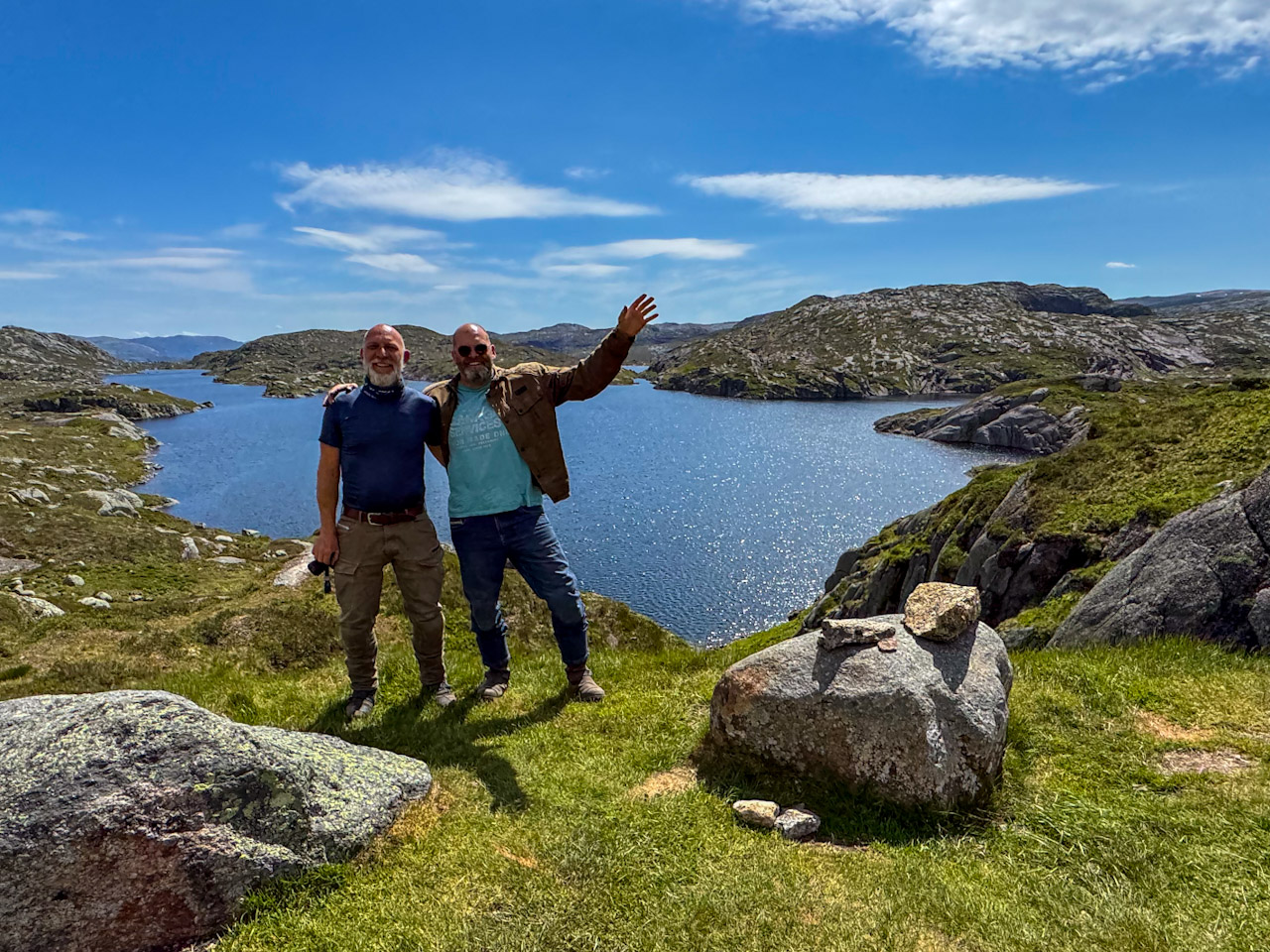
With that, our travel report through Sweden, Norway, Denmark, and Germany comes to an end. But one question remains: How did our two Moto Guzzis perform over more than 6,000 kilometers?
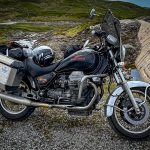
This journey also became a comparison between two completely different motorcycles: a classic 1991 Moto Guzzi California 3 and a modern Moto Guzzi V85 TT. Both carried us safely through Scandinavia—each in its own unique way.
To finish this series, we’d like to share our personal impressions. No technical test reports, no spec sheets—just two honest opinions after an unforgettable journey.
My Verdict on the Moto Guzzi California 3
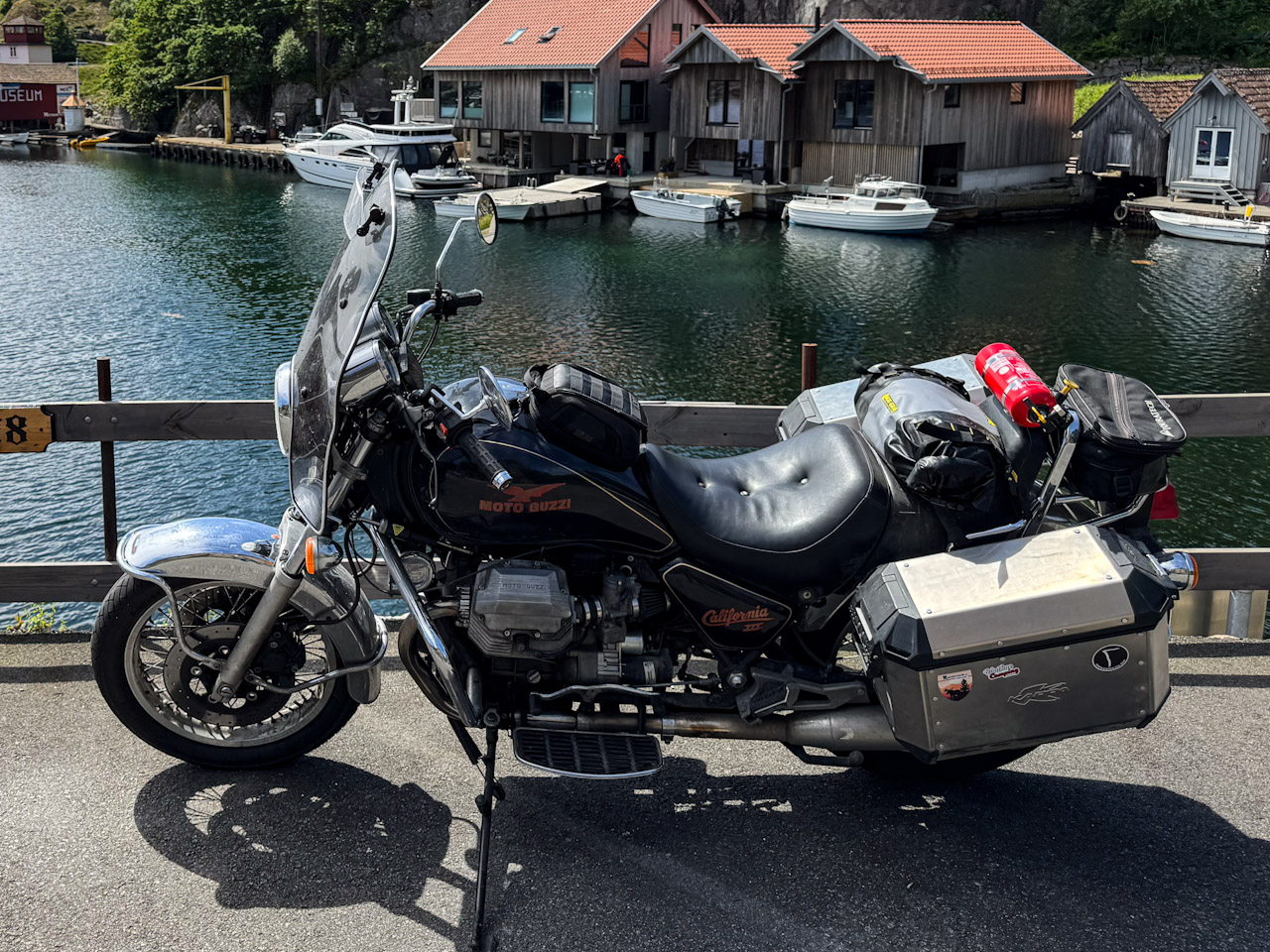
Part of our journey was also about comparing our two Moto Guzzis. I’ll start with mine and describe it through a story that happened to us in Norway.
We set off after a short break. I was the first to pull onto the road and slowly rolled on the throttle. My mirrors started vibrating like a 1950s hand mixer. Suddenly, two blurry fighter planes appeared behind me.
As I looked back at the road ahead, I imagined myself sitting in a Messerschmitt Me 109 from World War II, rolling down the runway. With Allied fighters on my tail, there was only one option:
Throttle wide open!
The engine made metallic noises like the anchor chain of a battleship racing across steel as the anchor dropped. After two loud popping backfires, the exhaust roared so fiercely that it was almost unbearable beneath my leather helmet. The open carburetors snorted like a herd of panicking buffalo. The footboards—my imaginary rudder pedals—vibrated so hard I could feel it in my knees. Every instrument on the dashboard shook in every direction.
With a jolt, the aircraft lifted off, and I flew just above the road through the valley. To escape my pursuers, I skimmed over the ground, carving one corner after another while matching my altitude to the landscape.
It was pure adrenaline.
Until a friendly female voice said:
“In 500 meters, take the third exit at the roundabout.”
I was back.
Back in the real world.
The two fighter planes in my mirrors were, of course, just the distinctive daytime running lights of Matthias’ Moto Guzzi V85 TT, shaped like the Moto Guzzi eagle, doubled by the vibrations. The metallic engine noises came from my rattling valves. The thunderous exhaust note came from my open Mistral silencers. The snorting was produced by my almost-open carburetors. The rudder pedals were actually my footboards, and the shaking instruments were simply… my shaking instruments.
But I had flown!
At least in that moment—on my Moto Guzzi California 3.
The tears of joy in my eyes as I write these words are my witnesses.
This motorcycle has brought me a little closer to myself.
This is what I do. This is who I am.
Of course, it wasn’t perfect. During the trip, the California occasionally refused to start without a bit of persuasion. The clutch cable snapped, the tail light developed a loose connection, and I had a flat front tire. Apart from that, there were no other issues.
And yet, I have to be honest: Technically, the California 3 can’t compete with Matthias’ V85 TT. Not in terms of the suspension, the engine, the brakes, or modern features like ABS. Whenever Matthias was leading at a brisk pace, I had to push the California to its absolute limits just to keep up.
But that’s not what this motorcycle is about.
The California isn’t built to win comparison tests or impress with specifications. It lives through its character, its sounds, its vibrations, and the emotions it creates. It doesn’t simply take you from one place to another.
It tells a story.
That was my verdict on the Moto Guzzi California 3.
You’ll find technical specifications and professional reviews elsewhere on the internet.
Matthias’ Verdict on the Moto Guzzi V85 TT
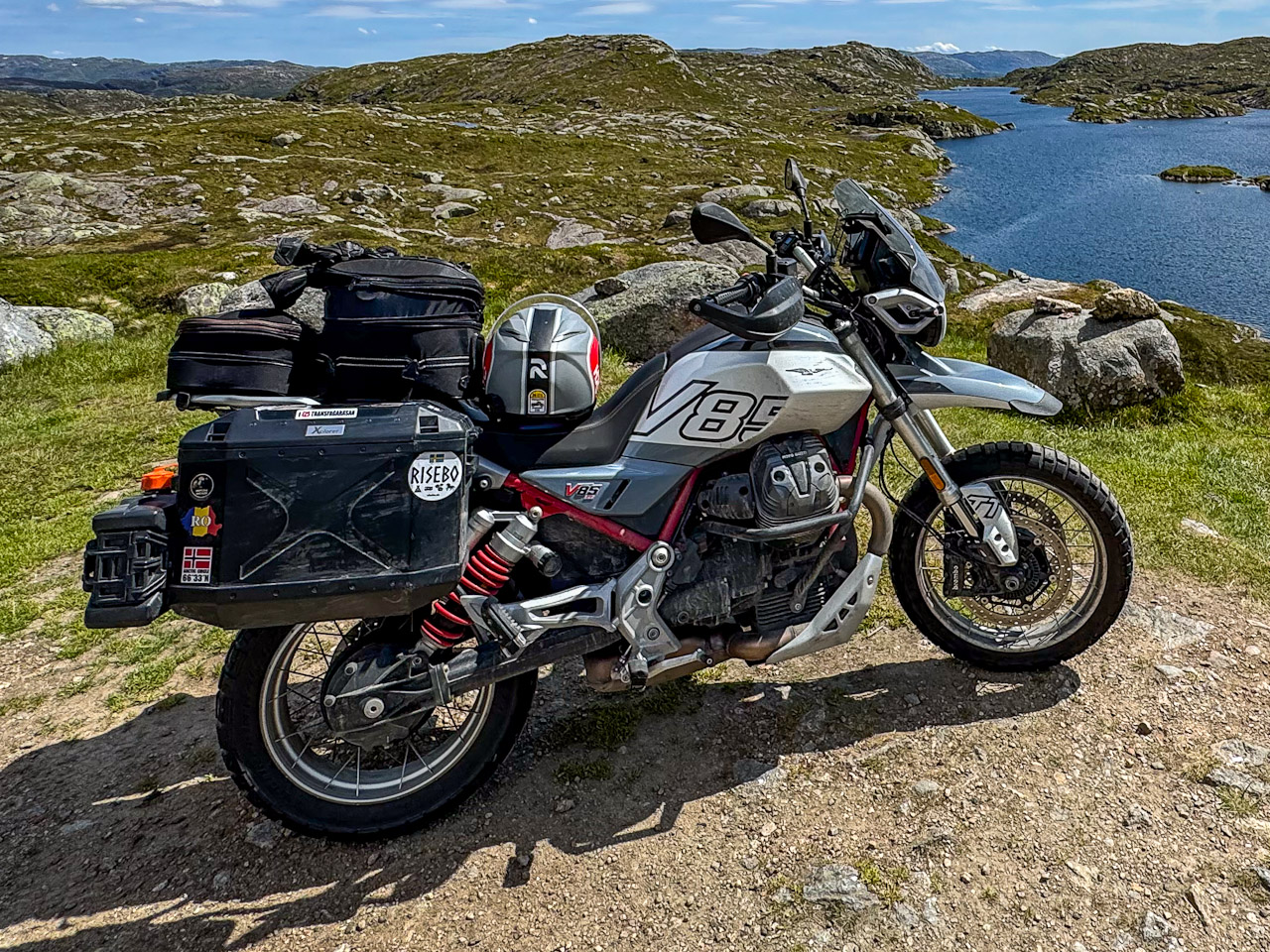
Just under one year old and with more than 10,000 km on the clock, the beautiful V85 TT had already proven itself on several mountain passes on the way to Lake Garda, and now once again, fully loaded, in Norway. My expectations, built after countless hours of research, were completely fulfilled.
An uncomplicated touring companion with plenty of riding fun and unmistakable Italian flair!
What makes it so special is the combination of an almost old-fashioned air-cooled two-valve V-twin with modern features such as lean-sensitive traction control, ABS, and several riding modes. The cruise control was especially useful on the few long, straight sections of road. My bike is also equipped with heated grips, which came in very handy in 9°C rain near Trondheim. The simple menu system is easy to operate using the handlebar switch. And thanks to the shaft drive, there’s no chain maintenance to worry about on the road.
The heart of the bike, the 853 cc longitudinal V-twin, is well known for its unique rhythm. You have to like it—it vibrates noticeably, and the sound changes dramatically depending on the engine speed. Coming from Yamaha’s refined CP2 engine, it certainly took some getting used to. Around 3,500 rpm, it rattles quite enthusiastically.
The previous engine’s torque dip between 2,000 and 3,000 rpm has largely been engineered away thanks to variable valve timing, although it still feels a little soft when accelerating hard from low revs. That didn’t bother me at all, especially since we spent most of our time flowing through the curves with plenty of torque at lower engine speeds. On steeper climbs and tight hairpins, the engine willingly revs beyond 5,000 rpm, sounds fantastic, and delivers more than enough power for me.
The exhaust has a deep, pleasant growl under load without ever becoming too loud. The overrun crackle—especially in second gear—produces a wonderfully metallic “rump-pum-pum” sound that I really enjoy.
What impressed me most was the handling. The bike feels incredibly light and agile. Although I was initially concerned about how it would behave fully loaded (I deliberately chose NOT to weigh it), it remained surprisingly easy to ride. The left Hepco & Becker Explorer pannier is the same size as the right one but sticks out farther because it has to clear the exhaust. After a short adjustment period, even for a rider with relatively little touring experience like me, it wasn’t an issue at all—the footpeg touches down long before the pannier ever would.
The windscreen is smaller than the one on the Travel model and, of course, can’t be compared to Joe’s enormous California windshield. I raised it in the rain; otherwise, it worked perfectly well in its lowest position.
The foot position takes some getting used to. Anyone with a shoe size larger than 41 (EU) will have to figure out where to place their boots. If you ride on the balls of your feet, your heel touches the exhaust or other components. If you place your feet flat on the pegs, you’ll often drag the rear brake without even noticing. Fortunately, the display lets you know.
As already mentioned in the blog, I initially had some concerns about the tires. Since the slight hopping and oscillation of the Pirelli Scorpion Rally turned out to be nothing unusual or serious, I simply accepted it. With the Michelin Anakee Road, this behavior disappeared completely.
The rear brake is a little on the weak side, but it’s perfectly adequate for assisting and modulation. The Brembo front brake, on the other hand, is excellent.
The range of well over 400 km is simply fantastic. Faithful blog readers may remember that on Romania’s Transalpina, our smaller fuel tanks—and a bit of carelessness—forced us to switch to the reserve.
My Verdict
I fell in love with the V85 TT during the test ride, and after this journey I can honestly say it has delivered everything it promised.
It’s a unique combination of character, style, and engineering. Not only the design, but also the technology fascinates me. V-twin character without the Harley circus, modern components, and outstanding handling.
Its few minor flaws are easy to forgive because of its charm. Even so, I’m happy to still have my Yamaha XSR with its refined parallel twin waiting in the garage.
Total time: 05:50:57